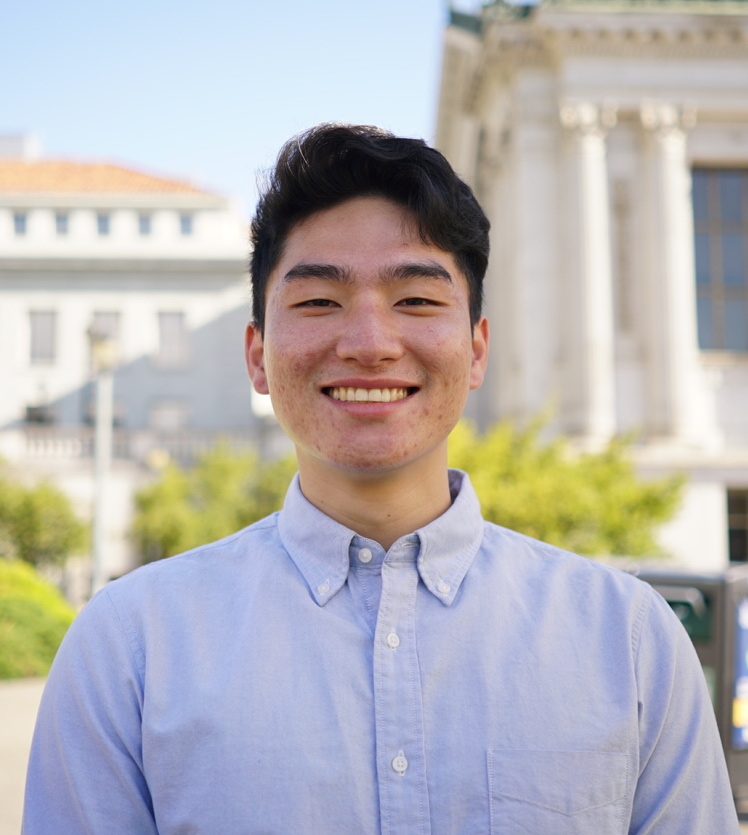
Dennis J. Yuan, PhD
About
I am a postdoctoral fellow in the Landau Lab at Weill Cornell Medicine and the New York Genome Center, where I develop single-cell technologies that link mutations and cell states.
I trained as a biomedical engineer. My doctoral work at Columbia used engineered materials to probe how mechanical cues shape T cell activation, which is where my interest in single-cell heterogeneity started.
Research
1Single-cell genotype-to-phenotype mapping in normal tissues
Somatic mutations accumulate in every tissue as we age, and a key insight is how a genotype contributes to cell state and behavior. We built scG2P to co-capture somatic DNA mutations and mRNA transcripts from the same cell at scale. Applied to esophageal tissue from older adults, more than half of cells carried clonal driver mutations. In this mutation landscape, we revealed that NOTCH1- and TP53-mutant clones disproportionately occupy immature differentiation states, staying in the tissue and continuing to divide instead of maturing and shedding from the surface.
2Retracing evolutionary histories in aging and pre-cancerous tissues
Clonal competition occurs in normal tissue over decades. Using large-scale single-cell phylogenetics, we reconstruct a timeline of when clones arose, which mutations initiated expansion and which genetic events follow, and how fast clones expanded, turning a static snapshot of mutations into a history of the tissue.
3Earlier work — T cell mechanobiology
My doctoral work at Columbia asked how the physical properties of an antigen-presenting surface shape a T cell’s response. T cell activation turns out to be biphasic in substrate stiffness, and soft elastomer fiber scaffolds can expand T cells from patients whose cells expand poorly by conventional methods — a route to personalizing cell therapy manufacturing.
News
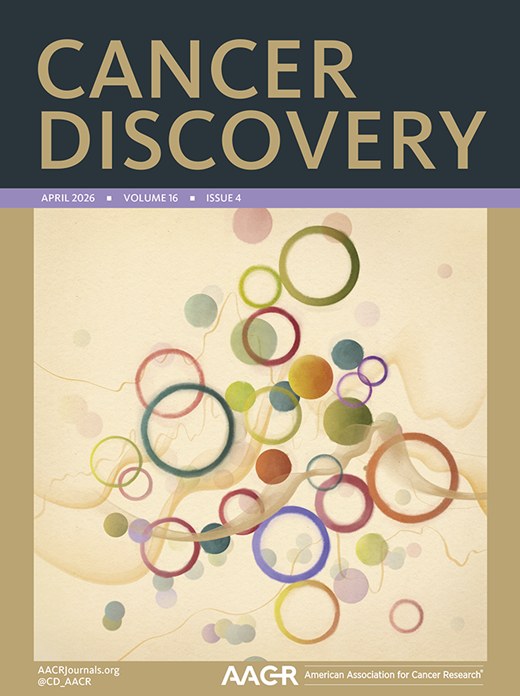
Cover image reproduced from Cancer Discovery 16(4), © American Association for Cancer Research. Artwork by Bianca Dunn.
- Aug 2026 Dennis presented a webinar on mapping clonal mosaicism in aging tissues, hosted by The Scientist.
- Jul 2026 Dennis was named a MacMillan Postdoctoral Fellow (2026–present) by the MacMillan Center for the Study of the Non-coding Cancer Genome at the New York Genome Center.
-
Jan 2026
Dennis and colleagues showed that pre-cancerous states are already present in seemingly normal aging tissue, work covered by the WCM Newsroom and the Cornell Chronicle.
 Image: Weill Cornell Medicine Newsroom
- Dec 2025 Dennis and colleagues published scG2P in Cancer Discovery.
- Dec 2025 Dennis was recognized by the New York Genome Center for Outstanding Contribution by a Postdoctoral Fellow.
- Oct 2025 Dennis presented at the American Society of Human Genetics (ASHG) Annual Meeting in Boston.
- Oct 2025 Dennis and colleagues posted a preprint on large-scale single-cell phylogenetic mapping of clonal evolution in the human aging esophagus.
- Jun 2024 Dennis presented at the Festival of Genomics in Boston.
- May 2024 Dennis and colleagues posted the scG2P preprint to bioRxiv.
- Feb 2024 Dennis presented and won Best Poster at the Probing Human Disease Using Single-Cell Technologies Conference in Cancún.
- Feb 2024 Dennis presented a Late Breaking Abstract at Advances in Genome Biology and Technology (AGBT) in Orlando.
Publications
Full list, newest first. Also on Google Scholar.
-
Genotype-to-phenotype mapping of somatic clonal mosaicism via single-cell co-capture of DNA mutations and mRNA transcriptsCancer Discovery, 2026
-
A comprehensive view of somatic mosaicism by single-cell DNA analysisbioRxiv (preprint), 2025
-
Large-scale single-cell phylogenetic mapping of clonal evolution in the human aging esophagus*Co-first authorsbioRxiv (preprint), 2025
-
Paired plus-minus sequencing is an ultra-high throughput and accurate method for dual strand sequencing of DNA moleculesbioRxiv (preprint), 2025
-
Biphasic response of T cell activation to substrate stiffnessBiomaterials, 273:120797, 2021
-
Enhanced activation and expansion of T cells using mechanically soft elastomer fibersAdvanced Biosystems, 2(2):1700167, 2018
-
Improving T cell expansion with a soft touchNano Letters, 17(2):821-826, 2017
-
Astrocyte elevated gene-1 (AEG-1) induces epithelial-mesenchymal transition in lung cancer through activating Wnt/beta-catenin signalingBMC Cancer, 15(1):107, 2015
Background
Appointments
- 2026–presentMacMillan Fellow
MacMillan Center for the Study of the Non-coding Cancer Genome
New York Genome Center - 2021–presentPostdoctoral Fellow
Weill Cornell Medicine & New York Genome Center
Landau Lab (Dan Landau, MD PhD) - 2017–2020TL1 Precision Medicine Fellow
Irving Institute for Clinical and Translational Research, CUIMC
Education
- 2017–2021PhD, Biomedical Engineering
Columbia University
Thesis: Mechanical regulation of T cell activation (Lance Kam, PhD) - 2015–2017MSc, Biomedical Engineering
Columbia University - 2011–2015BSc, Bioengineering, magna cum laude
University of California, Los Angeles
Awards
- 2026–presentMacMillan Postdoctoral Fellowship
MacMillan Center for the Study of the Non-coding Cancer Genome, New York Genome Center - 2025Outstanding Contribution by a Postdoctoral Fellow
New York Genome Center - 2017–2020NIH/NCATS TL1 Precision Medicine Fellowship
Contact
dyuan@nygenome.org
New York Genome Center, 101 Avenue of the Americas, New York, NY 10013
Built with Jekyll and the Minimal Light theme.